


Learn how to plant flowers in a pot in just three simple steps for a perfectly proportioned garden vase that will be a beautiful focal point for your front porch, deck, or patio. Makes planting flowers for beginners EASY!
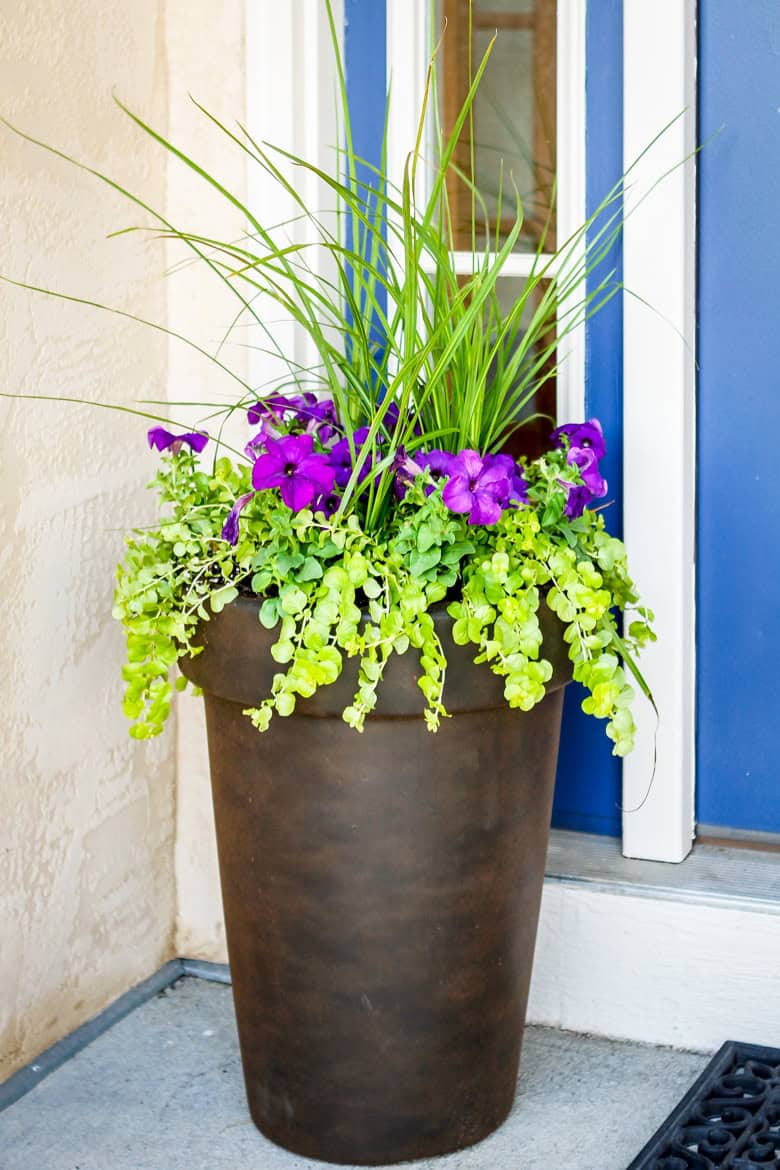
One task I never got around to last summer was sprucing up our front porch. So I was excited when Walmart sent me this really nice resin garden vase as an inspirational starting point! I've been dying to hit the Garden Center to check out their selection...
We've had somewhat cooler weather the past few days, so I seized the opportunity to plant some flowers before the summer heat really hits.
Flower Planter Ideas
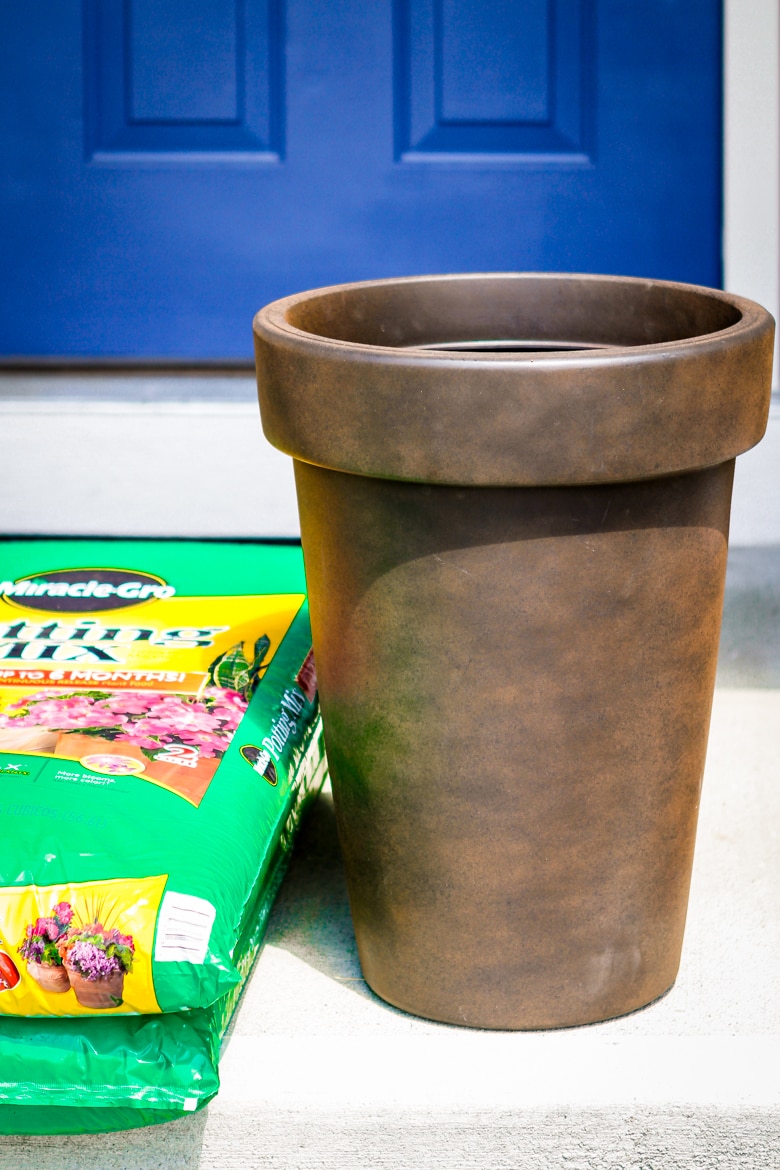
At nearly 21 inches high, the Better Homes and Gardens Bombay Garden Vase definitely packs some eye-catching drama. And it comes with an impressively low price, far below the prices I saw at our local greenhouse. Plus, this faux ceramic planter has a lightweight resin construction in a durable ceramic finish and is UV resistant, meaning it should last for many years.
Only problem? I had NO IDEA what kinds of flowers would work best in it. I'm the kind of gardener who just buys whatever flowers and greenery catch my eye without a thought as to where I'm going to plant them, so I was especially smitten when I flipped the price tag to find three suggested steps for creating a perfectly proportioned planter. Having a plan in mind when I was browsing my local garden center was especially helpful!
How To Plant Flowers In A Pot In 3 Steps
Seriously, this 3-step method is sure to make planting flowers for beginners super straightforward and simple. After the fact, I learned that a lot of gardeners refer to this as the "thrill, fill, and spill" method, and I think you'll understand why in just a moment... Let's get started!
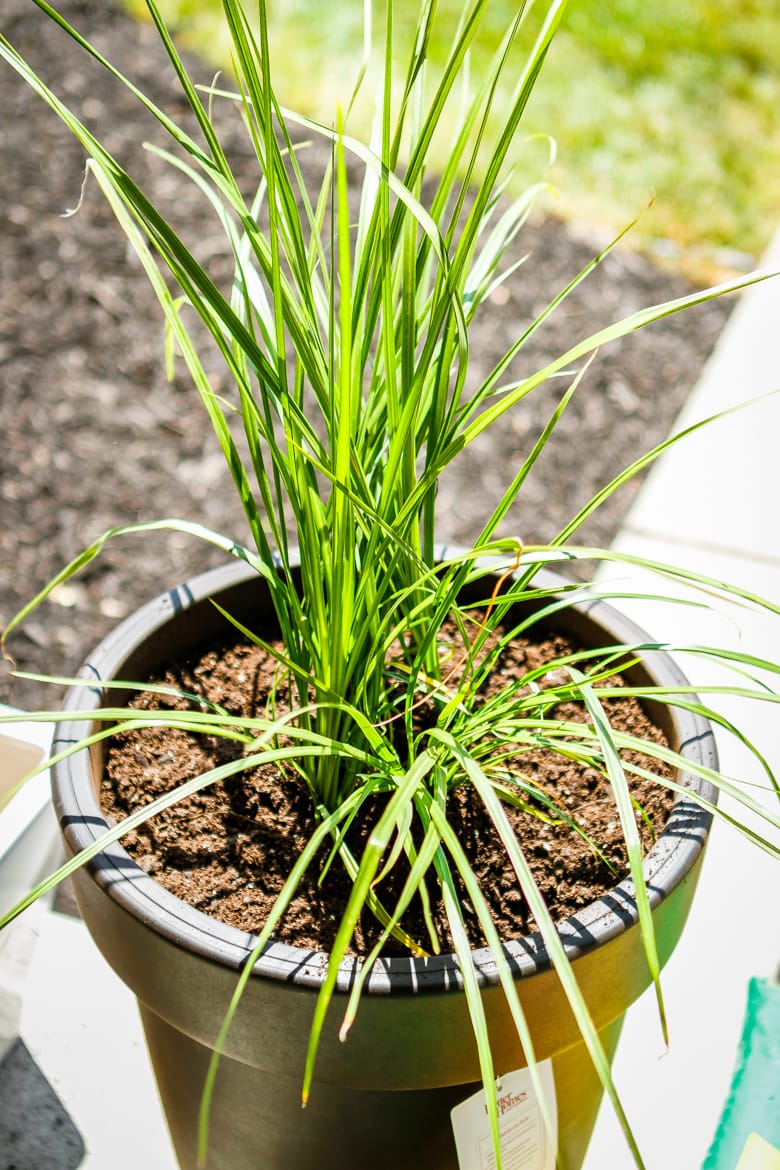
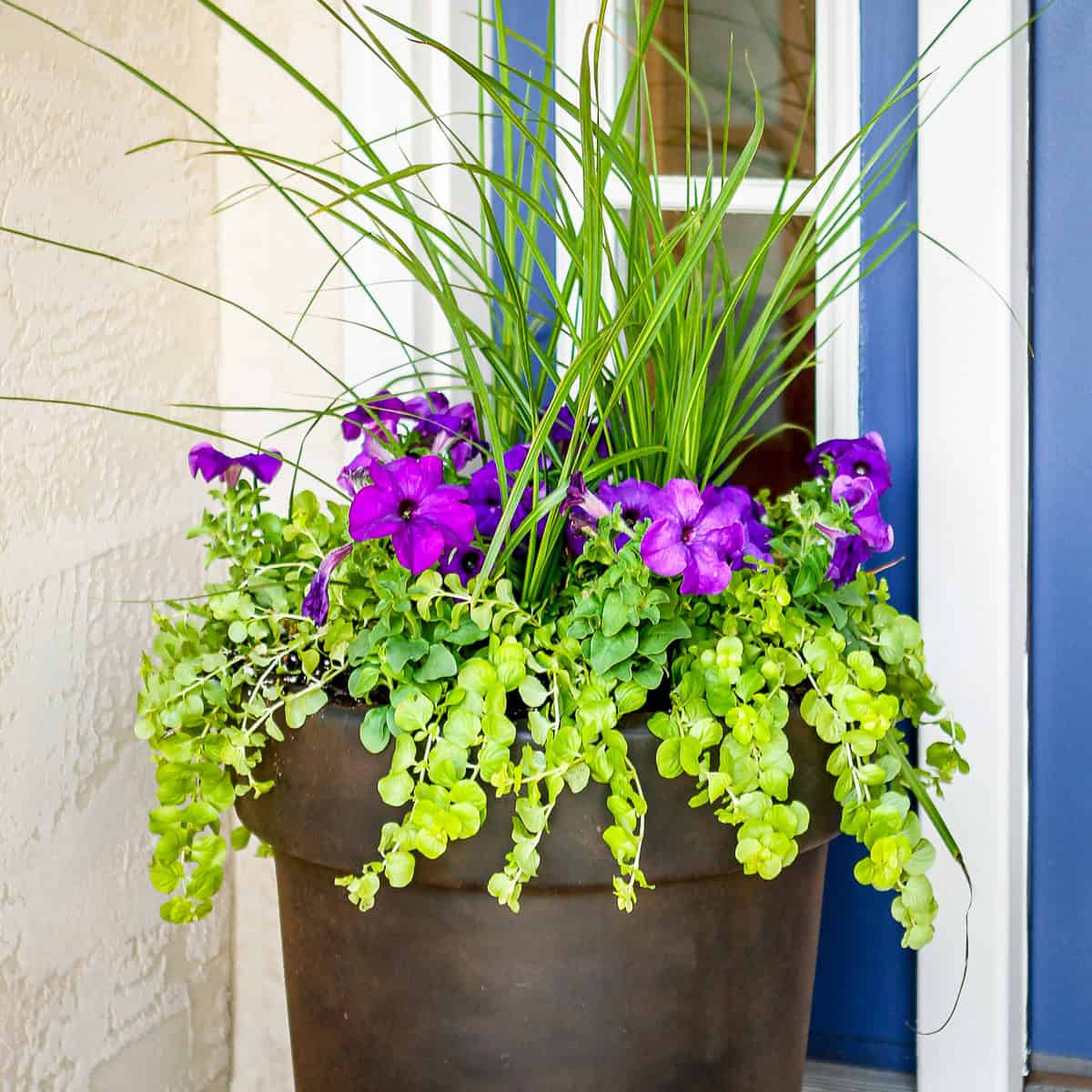
1| Choose a dramatic large plant as a focal point. I went with the dracaena pictured above, because it grows to between 18-24 inches tall. It provides plenty of height in the center of my flower planter already and will continue to grow throughout the summer.
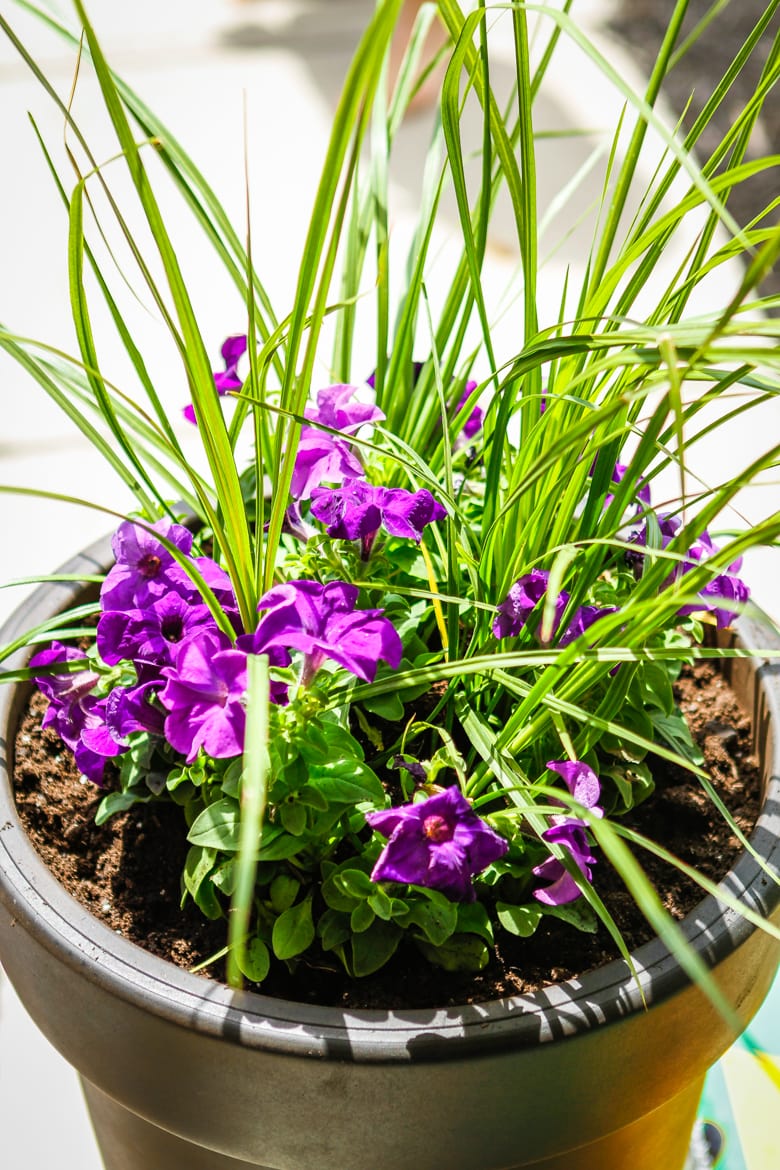
2| Add a soft, billowing filler plant around the base of the focal plant. So around the dracaena, I added these beautiful deep purple wave petunias. Petunias are easy to grow and provide continuous color throughout the summer, ensuring a beautiful flower planter for several months.
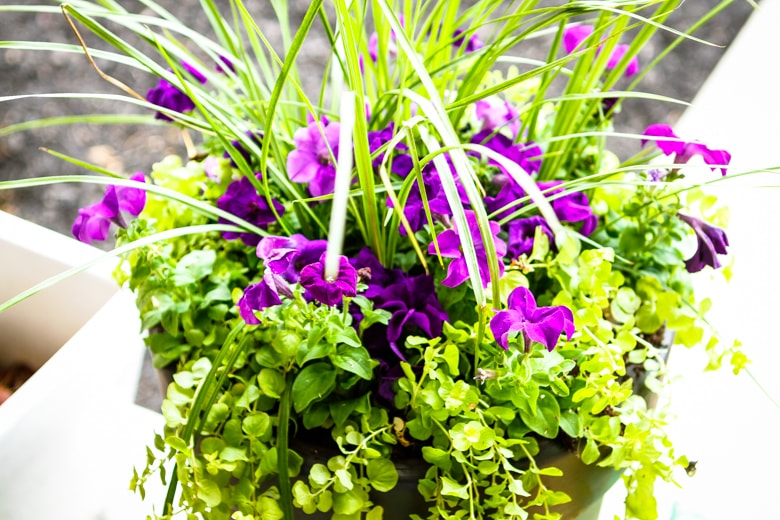
3| Plant a trailing or tumbling plant that spills over the edges around the outside. For this effect I went with lysimachia, a leafy, bright chartreuse plant that provides exactly this effect. This fast-growing, creeping plant will spread out and grow even longer throughout the course of the summer.
So do you see the thrill, fill, and spill parallel now? The thrill is the eye-catching, dramatic, tall plant in the center, the fill is a plant that will spread and grow wide, and the spill is a plant that will trail off over the edges of your flower planter. I can think of SO many fabulous flower planter ideas using this easy 3-part combination!
How To Plant Flowers In A Pot In 3 Steps
Key Equipment
Supplies
- potting soil
- dramatic large plants, 3 dracaena plants pictured
- soft billowing filler plants, a 6-pk. of wave petunias pictured
- trailing or spilling plants, 4 lysimachia plants pictured
- lava rocks, (optional)

Instructions
- Fill your flower planter up with a good quality potting soil. If it's especially tall, like the garden vase pictured, you may want to add some lightweight lava rocks to help fill it out and reduce the amount of potting soil needed.
- Choose a dramatic large plant, such as dracaena, as a focal point. Plant it in the center of your planter.
- Add a soft, billowing filler plant, such as wave petunias, around the base of the focal plant.
- Plant a trailing or tumbling plant (lysimachia pictured) that spills over the edges around the outside.
- Water lightly after planting and as needed thereafter.
Featured Products


I absolutely adore my flower planter and how it dresses up my front porch! I'm considering adding a few more brighter flowers to it, only because the gorgeous purple shade gets a little lost in the dark navy color that we used on our front door.
But I just can't decide what color I'd like to add. Suggestions please?
More Easy Gardening Ideas To Try
You might also enjoy these other simple & easy gardening ideas:
- How To Grow Strawberries In Pots
- Easy Indoor Herb Garden Planter
- Braided Hibiscus Tree Care
Did you make this recipe?
Tag @unsophisticook on Instagram and hashtag it #unsophisticook.

christine says
Hi, looks great. How many plants did you use?
Tara Kuczykowski says
Hi Christine! I used 3 of these dracaena plants, a 6-pk. of these wave petunias, and 4 of these lysimachia plants. The lysimachia may not seem like quite enough at first, but it's a fast-growing, creeping plant and will quickly fill in. You can gently spread them apart a bit when planting them to give the appearance of a little more coverage to start.
Agatha says
Use flowers with opposite flowers on the colour wheel. It gives great contrast and compliments each other.
Kim Hutcheson says
I took a flower arranging class years ago for fun. The instructor told us complimentary colors for purple not only are shades of purple a nice addition, but yellow makes a great complimentary color. One can add a yellow in smaller sized blooms, and a touch of white can even be a nice add, like a little babies breath.
Becky Hardin says
Awesome tips. Thank you for sharing.
Chelsea says
These tips are sooo useful! Can't wait to get planting!! Thanks for sharing!